Always Getting Cold/Flu? TCM Answers for Viral Protection in Nanaimo
If you’re reading this in Nanaimo and thinking, “Every time a cold or flu goes around, I’m the one who gets it”—you’re not alone. As we head into colder months, many people come to my practice looking for better ways to protect themselves. Let’s explore what viral protection really means in TCM, and what you can do to stay well when viruses are circulating.
In this article, we’ll explore:
- Why do I always catch colds?
- What does “viral protection” mean in TCM?
- A common cold vs. the flu: why the difference matters
- 5 signs you’re more vulnerable to seasonal illness
- How to prevent colds naturally: 3 daily habits
- What to do at the first sign of illness
- Is there an herbal remedy that helps?
- An important reminder: no single formula works for every cold
- When to see a professional for seasonal support
Why do I always catch colds?
This is one of the most common questions I hear in my Nanaimo practice, especially as winter approaches. You might notice that you’re the first in your family to get sick, the last to recover, or that every cold seems to hit you harder than others.
The short answer? This is often a sign that your body’s defensive layer—what we call Wei Qi in TCM—needs support. Think of it as the “buffer zone” between you and the outside world. When it’s strong, you can be around sick people and stay well. When it’s weak, you pick up everything that’s going around.
(This connects directly to our article on why you might always be getting sick, which goes deeper into the concept of Wei Qi.)
What does “viral protection” mean in TCM?
The phrase “viral protection” might sound like something from modern medicine—a shield that blocks viruses from entering. In TCM, the concept is both simpler and deeper.
Viral protection doesn’t mean “never being exposed.” Viruses are everywhere, especially in shared spaces. Protection means that when you are exposed, your body recognizes the threat quickly and responds effectively—before it takes hold. This is what we call having strong Wei Qi.
But there’s another layer: what happens if a virus does get in. True viral protection also means your body can mount the right response—clearing the pathogen quickly, preventing it from going deeper, and recovering without complications. This is where understanding the difference between a common cold and a flu becomes essential.
A common cold vs. the flu: why the difference matters
People often use “cold” and “flu” interchangeably, but in TCM, and for your recovery, the difference is crucial.
A mild common cold your body can often handle on its own. If your Wei Qi is strong, you might shake off a few sniffles in a couple of days. These are usually Wind-Cold or mild Wind-Heat patterns—annoying, but not dangerous.
The flu, or a severe viral infection (like COVID-19), is different. It develops rapidly. In TCM terms, it’s a more aggressive pathogen that can quickly create heat and phlegm, leading to serious symptoms like high fever, a painful sore throat, and a cough with thick phlegm. For many people, especially those with an underlying Phlegm-Damp constitution (which is common in Nanaimo), this can lead to a severe, prolonged illness with difficulty breathing and a slow recovery.
This is why true viral protection isn’t just about “not getting sick”—it’s about having the resilience to handle whatever comes your way, and knowing how to respond when the pathogen is stronger than a common cold.
5 signs you’re more vulnerable to seasonal illness
How do you know if you might be more susceptible? Here are five common signs people in Nanaimo notice:
- You catch every cold that goes around — You’re the first down, every time.
- Recovery takes forever — A cold that lasts 3 days for others lasts 10 days for you.
- You feel run down before getting sick — Like your body was already tired before the virus hit.
- Sensitive to wind or drafts — A slight breeze seems to lead to a sore throat the next day.
- You’ve been under stress or sleeping poorly — Both drain your defenses. (See our stress guide and sleep support.)
How to prevent colds naturally: 3 daily habits
People often ask, “How to prevent colds naturally?” Prevention is about building strong daily foundations. Here are three habits you can start today:
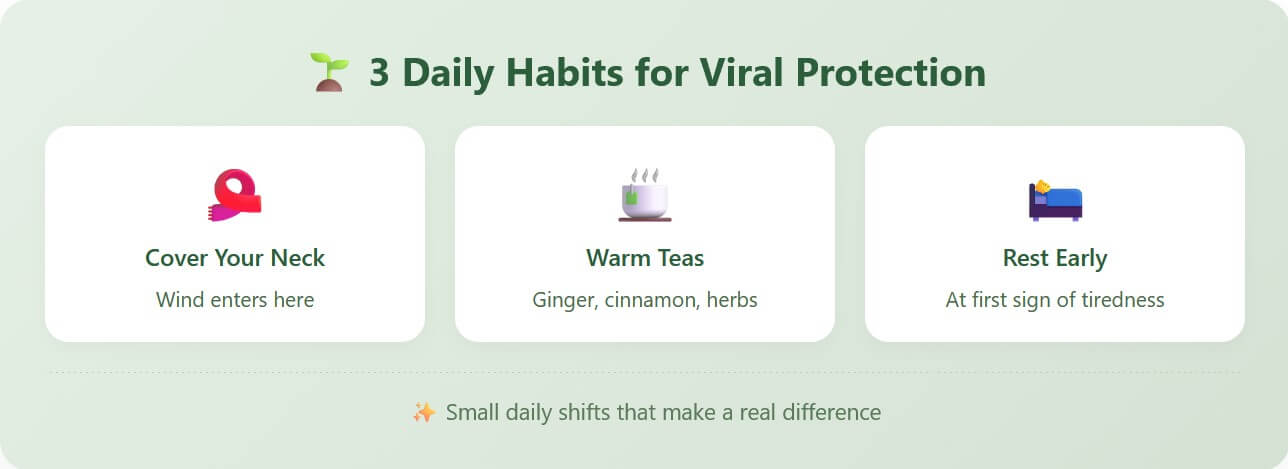
1. Protect your neck and upper back
In TCM, the back of the neck is called the “Wind Gate”—a primary entry point for colds. When this area is exposed to wind or cold, pathogens can enter more easily.
You might try: Wearing a scarf or collar that covers the nape of your neck, especially on windy days or when transitioning between warm and cold environments. Patients tell me this simple habit dramatically reduces how often they get sick.
2. Eat warm, cooked foods
Raw, cold, or damp-producing foods (like dairy, sugar, and cold drinks) can weaken your digestive fire and, by extension, your defenses.
You might try: Emphasizing warm soups, stews, and cooked vegetables during colder months. A simple chicken soup with ginger and garlic isn’t just comfort food—it’s medicine.
3. Rest at the first sign
The moment you feel that familiar tickle in your throat or vague sense of “off,” your body is asking for support. Pushing through often turns a minor exposure into a full-blown illness.
You might try: When you notice early signs, go to bed an hour earlier. Skip one social obligation. Make a warm tea with ginger and honey. This small intervention can make the difference between a mild 2-day sniffle and a 10-day ordeal.
What to do at the first sign of illness
This is a question people search for constantly: “what to do at first sign of cold.” In TCM, we respond differently based on the pattern:
- If it feels like Wind-Cold (chills, stiff neck, clear runny nose) — Warmth is your friend. A hot bath, a scarf, ginger tea, and early bed. You want to encourage gentle sweating, which can “push out” the cold.
- If it feels like Wind-Heat (sore throat, feverish, yellow mucus) — Cooling but not cold. Peppermint tea, light foods, and rest. Avoid spicy or warming foods that could add heat.
In either case, rest is non-negotiable. Your body needs energy to fight, not to run errands or meet deadlines.
Is there an herbal remedy that helps?
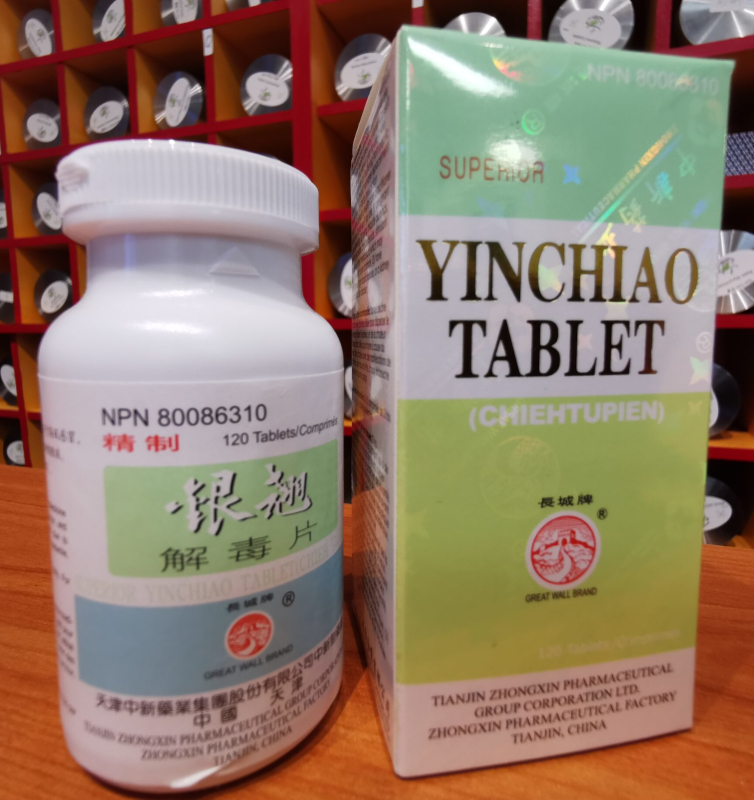
Yinchiao Jiedu Pian (银翘解毒片) – for wind-heat invasion and viral symptoms
For the type of aggressive, heat-producing viral infection described above, there is a very famous and effective formula: Yinchiao Jiedu Pian (银翘解毒片). As its product description states, it is designed to “clear away heat, detoxify and reduce fever,” and is “mainly used for fever, headache, cough, sore throat, dry mouth and other symptoms caused by epidemic viruses/wind-heat cold” [1].
Think of it as a formula that works swiftly to stop a viral invasion in its tracks. It helps the body by:
- Releasing the exterior and clearing heat.
- Detoxifying the pathogen.
- Reducing the severity and duration of the illness.
It’s specifically for what TCM calls a “Wind-Heat” invasion—which matches the symptoms of a fast-developing flu or COVID-19. Using it at the very first sign of a sore throat, fever, and headache can significantly slow the illness’s progression and help your body recover much faster. It is not intended for the mild, chills-and-sniffles common cold.
This reflects a core TCM principle: “preventing disease from becoming worse.” By using the correct medicine at the right time, you can prevent a mild issue from developing into a severe one [1].
An Important Reminder: No Single Formula Works for Every Cold
This is perhaps the most important point in this entire article: there is no single herbal formula that works for every cold or flu.
Whether it’s Yinchiao Jiedu Pian for a wind-heat invasion, or Xiao Chai Hu Tang Wan (Minor Bupleurum) for the pattern where chills and fever alternate, these remedies don’t “kill” the virus like an antibiotic might. Instead, they work by helping your body restore its own balance. They support your immune system—your body’s own defense force—to do what it already knows how to do. Ultimately, it is always your own immune system that does the real work of fighting off a virus.
The difference between these formulas lies entirely in the pattern of imbalance they address. Using the wrong one—for example, taking a cooling, heat-clearing formula like Yinchiao Jiedu Pian for a chilly, Wind-Cold pattern—can actually make things worse, driving the pathogen deeper and prolonging your discomfort.
This is why it’s essential to consult a qualified TCM practitioner. Self-prescribing based on a single symptom (like “sore throat”) without understanding your full pattern can lead to more harm than good. A proper diagnosis ensures you get the formula that truly fits your body’s needs at that moment.
If you’re in Nanaimo and unsure about your pattern, an initial consultation can provide the clarity you need to navigate cold and flu season safely and effectively.
When to see a professional for seasonal support
If you find yourself getting sick multiple times each winter, or if colds consistently turn into something more (bronchitis, sinus infections, weeks of cough), it’s worth looking deeper.
In my Nanaimo practice, we look at the whole picture: your history of seasonal illness, your energy between colds, and any patterns that might make you more vulnerable. We also use tongue and pulse diagnosis to understand the state of your defensive systems.
From there, we can put together a plan tailored to your body—whether that’s seasonal acupuncture treatments, a customized herbal formula to take through winter, or adjustments to your daily routine that build resilience over time.
You might also find these helpful:
- Why Am I Always Getting Sick? (deeper look at Wei Qi)
- Always Stressed? (stress weakens immunity)
- Always Tired? (low energy = low defenses)
Disclaimer: This article is for informational purposes only and is not a substitute for professional medical advice. Always consult a qualified healthcare provider before starting any new herbal regimen, especially if you have symptoms of illness.