TCM Nanaimo Acupuncture, Herbal Tea & Natural Wellness
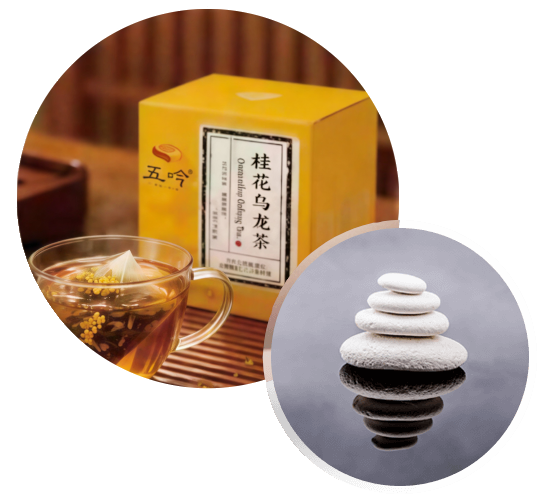
One More Cup of Tea
TCM Nanaimo daily rituals keep you well. Daily one simple cup, little by little for a prevention. Need more than daily care?
-Acupuncture, moxibustion and herbs for restoration.
Book online in 2 minutes 👇
Become a Member — Save 15% on treatmentsOur Services


Anxiety
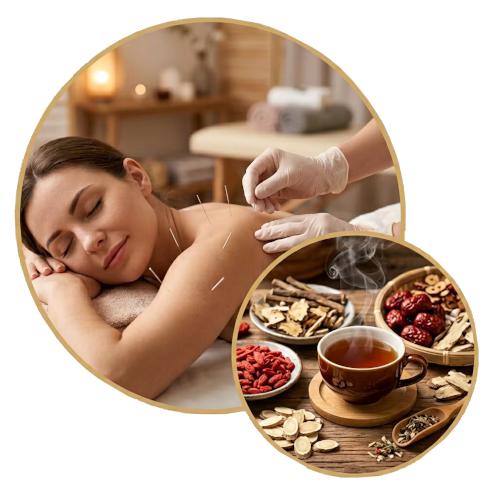
Racing thoughts, tight chest, restlessness. How the tea herbs and acupuncture can help you settle.

Vitality & Focus
Emotional distress during or following serious illness. Diagnosis of an


Digestive Health
Bloating, food reactions, fatigue after meals. Herbal support for gut healing.
Ready to restore your balance?
Learn from Our Herbal Wisdom

Digestion
Understand digestion through a TCM lens and discover gentle ways to support gut health

Immunity
TCM approaches to support your vitality and strengthen your body’s natural defenses

Cold/Flu
Understand seasonal support through TCM wisdom and how to stay balanced during colder months

Detox
Learn about gentle cleansing from a TCM perspective to support your body’s natural rhythms

Beauty
TCM perspectives on natural radiance, skin health, and inner-outer beauty connections

Vitality & Focus
Find natural ways to boost your daily energy and maintain steady vitality throughout the day

Membership Benefits
10 Times Package
$1200
Per Package
- Save 11% compared to single visit
- Moxibustion
- Acupuncture
- Gua Sha
- Tui Na
- Facial Acupuncture
- Use Anytime
Silver
$80
Per Year
- Moxibustion
- Acupuncture
- Gua Sha
- Tui Na
- Facial Acupuncture
- Free Tea Kit monthly
- Priority Booking
- 10% off of Regular Treatment Price
Gold
$150
Per Year
- Moxibustion
- Acupuncture
- Gua Sha
- Tui Na
- Facial Acupuncture
- Free Tea Kit monthly
- Priority Booking
- 15% off of Regular Treatment Price
✨ What Our Clients Say
-
I've been seeing Shirley to help me with eczema rashes that I have been struggling with for many years and I have already been seeing noticeable improvements from her personalized tea, treatments, and advice. Shirley is very good at locating which areas in the body are needing attention. I highly recommend booking with Shirley!
 Jenna McLeod
February 17, 2026The amazing Shirley Brown goes the extra mile to help you to heal. Her initial assessment and history taking is incredibly thorough. Not only does she assess your medical and surgical history but also goes into indepth assessment of your usual diet .eating .sleeping patterns and your exercise routines . Shirley then can treat and heal you so much more profoundly . My first treatment with Shirley was with Moxinustion . Shirley used this to heal imbalances and to restore my energy system and then could prescribe what was needed to make me heal. I went for my first appointment feeling that I could not be healed or would have to wait months if not years to see a specialist. After seeing Shirley I left feeling lighter stronger and with definitely less pain and actual optimism and knew that I had been really cared for . I have been going to see Shirley for special teas she makes depending on what organ in my body needs the most attention . Shirley is a truly gifted healer and her knowledge of Chinese medicine is profound . Shirley truly excels in her profession.
Sandie Bissessur
February 14, 2026Shirley at One More Cup of Tea provides supportive herbal teas and tools to maintain health. She is an important part of my team of health providers.
Steve Bruce
February 14, 2026 -
Excellent, only 3 and 4 treatments, me and my wife fully recovered.
GARY LIANG
December 2, 2025Prior to treatment I had chronic pain from spinal stenosis however, after a couple weeks of taking the tea that was specifically made for me I was in far less pain and discomfort. The results of the treatment were far greater than expected. I highly recommend!!
Justin Docksteader
June 28, 2025I started seeing Shirley in September 2024 when I knew I needed to do more to support my health. Shirley is so knowledgeable and is able to pinpoint things that need attention. Things Western Medicine misses. I am happy to report my blood pressure is down and stabilizing from her treatments and tea. I highly recommend Shirley!
The Primary Advantage
May 10, 2025 -
I would highly recommend booking a consultation with Shirley. I met with Shirley in September and on that day she was able to assess my pulse with precision and identify where improvements could be made to support balancing my body. During my initial consultation, Shirley designed a three month treatment plan for me. At each appointment Shirley thoroughly assessed my progress as we worked in partnership to bring my body into balance. Shirley excels at Moxibustion and Tui Na, two therapies that I experienced during my treatment plan and I also followed all of the “homework” that she assigned me. I am very happy with the positive results that I experienced and again I would highly recommended booking a consultation with Shirley.
Glynnis Schwan
December 11, 2024Shirley has helped me a great deal in improving my health. Being a Chinese from Hong Kong, I always trust TCM. Although I knew about moxa since I was a kid, I had never tried moxibustion before, until I met Shirley. I had encountered a medical issue in the past few years that none of my doctors and specialists could explain (or in their words "never heard of"). I had also tried cupping, Chinese massage and acupuncture. However, only after I started to have moxibustion and Shirley's five elements tea and herbal teas, I have experienced a huge improvement. As a matter of fact, many of the herbal teas that Shirley prescribes are actually very traditional recipes from the ancient Chinese medical records since thousands of years ago, which are commonly accessible online or on hard copies. However, to feel the pulse, check the body condition and then apply the right recipe for the treatment is utmost crucial and Shirley is proved to be able to do so. And I was told today that the official name of the clinic of "One More Cup of Tea" is "SLB Traditional Chinese Therapies" and there are a lot of information under that page. I am going to leave the exact same review under that name so nobody should miss it. Thank you Shirley.
Vickie
July 25, 2023Shirley is great and recommending treatments
Greg Binions
December 25, 2022 -
Shirley helped me with my health issues and is a very knowledgable and caring human being. Her services and products are fantastic!
Yori
December 16, 2022这是一种神奇的疗术,为我消除了身心的伤痛;一次偶然的机会,在纳耐莫认识了五行养生堂的梁女士,刚开始的一个疗程,是以抱着试试看的态度进行了以艾灸为主的理疗,使我消除了长期腰疼的苦痛;在我坚持做完第二个疗程后,两腋下出现了很多就像杂质的体液,同时全身变得有力,更大的是心情不断好了起来;我做完第三个疗程后,全身无比的轻松,让我真正感触到了身体机能的正常是多么开心的事情;本来我想连续做上几个疗程,但是,因为工作出差原因不得不暂停;我为遇到一种神奇的中国传统疗术而欣慰,我更为遇到梁女士的传统疗法而开心;希望中国传统疗法驱除民众的苦痛!愿此神奇的中国传统疗术康复更多的世间广众! Sunray Heating Ltd 总经理:孙小锋 2022年12月15日
Qianqian Yu
December 15, 2022My opinion is that the teas available at this store are the best natural medicine available in BC. I was amazed at the age of 75 how energized I felt after using Shirley's teas.
Lorne Brown
December 15, 2022 -
One More Cup Of Tea and Shirley helped me so much with my skin condition. I would recommend her highly.
Edwin Bussian
August 20, 2022Great tea! I feel like a new human today. Thank you very much for my heart still beating.
Shawn Pedersen
March 6, 2022


